High-rise buildings require reliable access systems for cleaning, inspection, repair, and routine facade care. As towers become taller and exterior designs become more complex, safe access to glass panels, architectural surfaces, fixtures, and structural components becomes a major maintenance concern. A building maintenance unit (BMU) Singapore solution provides a dedicated approach for controlled access across exterior building surfaces.
A well-planned building maintenance unit (BMU) Singapore system can support facade cleaning, glass replacement, inspection work, and other high-rise maintenance tasks. Unlike temporary access arrangements, a BMU can form part of a building’s permanent maintenance infrastructure, giving trained personnel a practical means of reaching designated areas of the facade.
For property owners, developers, facility managers, contractors, and engineering teams, choosing the right building maintenance unit (BMU) Singapore solution requires careful attention to building design, facade geometry, roof configuration, working requirements, safety equipment, and long-term maintenance needs.
Groxx Gears provides high-rise safety and building maintenance solutions designed for demanding construction and maintenance environments. Its solutions include suspended access systems for facade cleaning, glass replacement, and structural inspection, supported by a wider range of fall protection and high-rise safety equipment.
What Is a Building Maintenance Unit (BMU)?
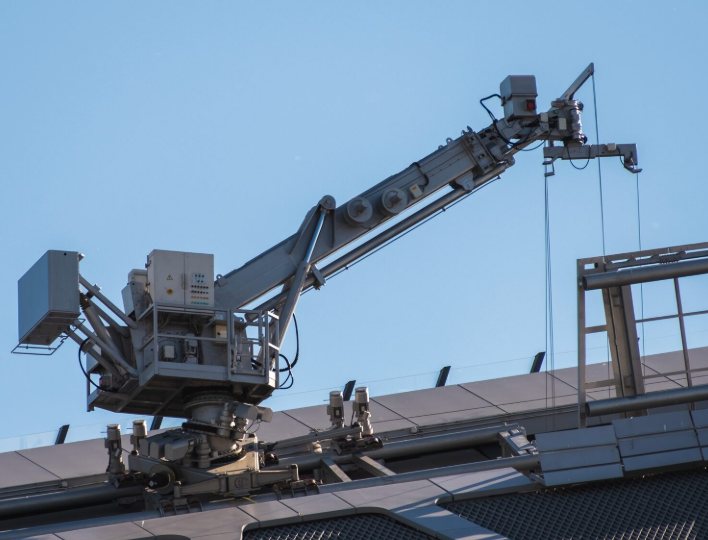
A building maintenance unit is a mechanical access system designed to help trained personnel reach exterior surfaces of high-rise structures. A building maintenance unit (BMU) Singapore system may feature a roof-mounted carriage, operating arm, hoisting equipment, suspended platform, control system, and related safety components.
The exact configuration depends on the building. A tower with a simple vertical facade may require a different system from a structure featuring curved glass, recessed sections, projecting architectural elements, or multiple facade levels.
A building maintenance unit (BMU) Singapore solution is commonly planned as part of a building’s overall facade access strategy. Rather than relying solely on temporary equipment each time exterior work is required, a purpose-designed BMU can provide recurring access for maintenance teams.
Understanding the Purpose of a BMU System
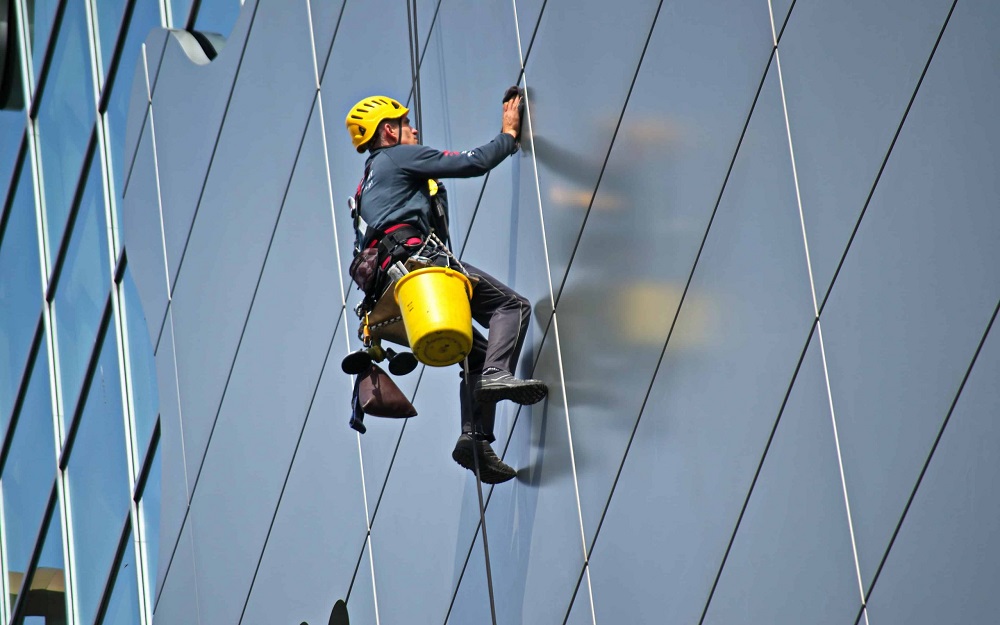
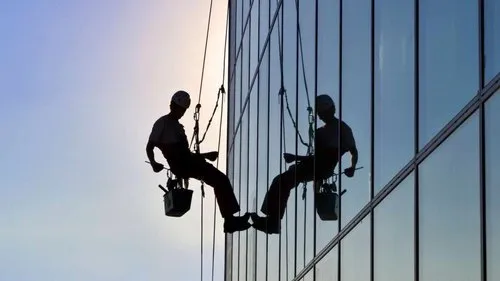
The primary purpose of a building maintenance unit (BMU) Singapore system is controlled exterior access. Personnel can use a suspended platform or other approved access arrangement to reach designated facade areas for tasks such as cleaning, inspection, repair, and replacement work.
A BMU does not remove the need for proper safety procedures, trained operators, inspections, or suitable personal protective equipment. Rather, it forms part of a wider access and safety arrangement designed around the building.
Why BMUs Matter for High-Rise Buildings
Modern towers often feature extensive glass surfaces, curtain walls, architectural panels, external fixtures, and other facade elements that require regular attention. Ground-based access may not reach these areas, while temporary scaffolding can require considerable setup, space, and project coordination.
A properly planned building maintenance unit (BMU) Singapore system can give maintenance personnel controlled access to facade sections while supporting recurring maintenance operations.
For a property owner, this can make facade maintenance easier to plan. For a facility management team, it can provide a dedicated access method suited to the building’s design.
Key Components of a Building Maintenance Unit
A building maintenance unit (BMU) Singapore system may contain several mechanical and electrical components working together to provide controlled exterior access. Exact equipment varies according to project requirements.
Roof Carriage or Trolley System
A roof carriage allows the BMU to move across designated areas of a roof or track system. Its configuration depends on available roof space, travel requirements, building geometry, and the required facade coverage.
Proper planning helps ensure that the equipment can reach the areas requiring regular maintenance without creating unnecessary operational limitations.
Davit, Boom, or Telescopic Arm
The operating arm helps position the suspended platform along the facade. Different arm configurations may provide different reach and positioning capabilities.
A building maintenance unit (BMU) Singapore system must account for facade projections, recesses, corners, setbacks, and other architectural features. A configuration selected without careful consideration of these details may not provide adequate access to every required area.
Suspended Platform
The suspended platform provides a working area for trained personnel carrying out approved exterior maintenance tasks.
Platform dimensions, working load, movement capabilities, and configuration should correspond with project requirements. Equipment selection should also consider the types of tools and materials that maintenance personnel may need during approved work.
Hoisting and Control Systems
Hoisting equipment manages vertical movement while control systems allow operators to manage the platform and associated BMU functions.
Dependable mechanical and electrical components are important for equipment that supports recurring high-rise maintenance operations. Proper inspection, servicing, and operator training also play a major role in safe equipment use.
Safety and Fall Protection Features
A building maintenance unit (BMU) Singapore system should form part of a wider high-rise safety plan. Depending on the building and equipment configuration, additional fall protection systems may be required.
Fall arrest anchors, horizontal lifelines, vertical lifelines, personal protective equipment, and other safety provisions may support work performed around elevated areas. The correct arrangement depends on the project design, applicable requirements, equipment specifications, and task conditions.
What Are BMU Systems Used For?
A building maintenance unit (BMU) Singapore solution can support many exterior building maintenance activities. The exact permitted tasks depend on the system’s design, capacity, operating procedures, and project requirements.
Facade Cleaning
Glass and other exterior facade surfaces require recurring cleaning to maintain appearance and support proper property maintenance.
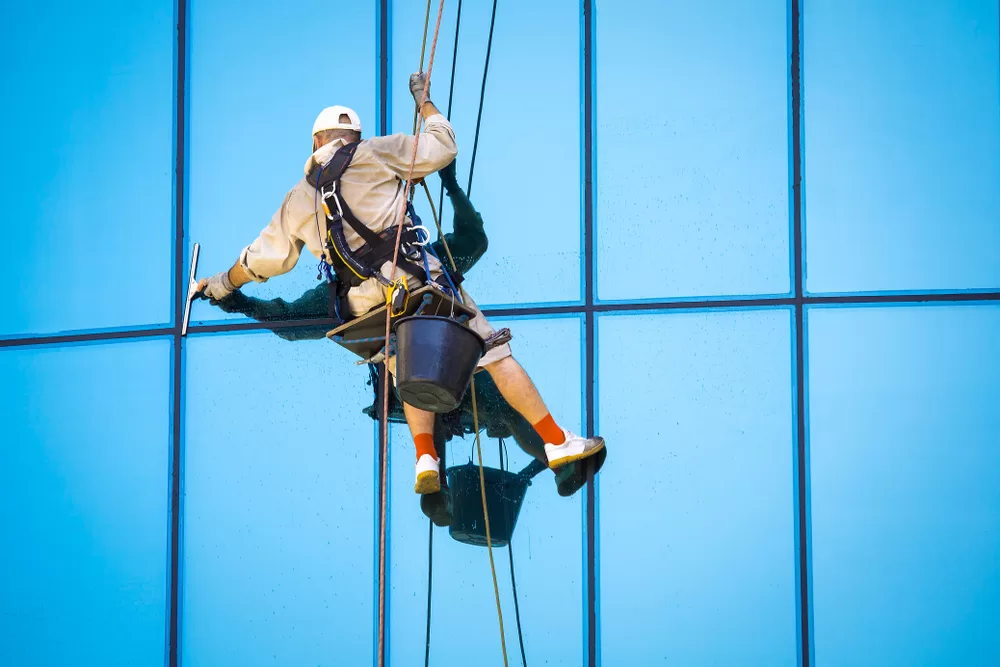
A BMU can provide controlled access for trained cleaning personnel across designated facade areas. This can be especially useful for towers with extensive glass surfaces or facade sections that cannot be conveniently reached from ground level.
Glass Replacement and Facade Repairs
Exterior glass replacement and facade repair work can require precise access to elevated sections. A building maintenance unit (BMU) Singapore system may provide a suitable access platform for approved work where the equipment has been designed for such tasks.
Maintenance teams may also need access for sealant work, facade component repairs, fixture servicing, and other approved activities.
Structural and Facade Inspections
Regular inspection can help building teams identify visible defects, damaged components, deterioration, or other issues requiring attention.
A controlled facade access system can support qualified inspection personnel by providing access to areas that may otherwise be difficult to examine closely.
Routine High-Rise Maintenance
High-rise buildings require ongoing attention beyond cleaning and major repairs. Exterior lighting, signs, architectural features, fixtures, panels, and other components may require inspection or servicing.
A properly selected building maintenance unit (BMU) Singapore system can support recurring maintenance activities while reducing dependence on ad hoc access arrangements.
Building Maintenance Unit (BMU) Singapore: Why System Selection Matters
No two buildings are exactly alike. A BMU suitable for one tower may not provide the right coverage or operating capability for another.
A building maintenance unit (BMU) Singapore project should start with a detailed assessment of the building and its maintenance requirements.
Important factors may include:
- Building height
- Roof layout
- Facade geometry
- Roof access
- Required horizontal travel
- Required vertical reach
- Platform capacity
- Boom or arm configuration
- Facade projections and recesses
- Maintenance frequency
- Existing safety systems
- Operating environment
- Storage and equipment access
- Inspection and servicing requirements
Early coordination among developers, architects, engineers, contractors, facility managers, and access-system specialists can help reduce design conflicts.
BMU planning should also consider future maintenance needs. A system designed solely around the building’s initial appearance may become restrictive if facade components, cleaning methods, or maintenance procedures change later.
Advantages of a Properly Designed BMU System
Safer Exterior Access
A building maintenance unit (BMU) Singapore system can provide controlled access to designated facade areas when properly designed, installed, inspected, maintained, and operated by trained personnel.
The equipment should always be paired with suitable safety procedures and protective systems required by the project.
Better Access to Complex Facades
Modern architecture can include curved walls, recessed sections, projections, multiple elevations, and extensive glass surfaces.
A BMU configuration planned around these characteristics can help maintenance personnel reach areas that may be difficult to access through conventional methods.
More Efficient Maintenance Operations
Recurring facade work requires planning, equipment, personnel, and access. A dedicated building maintenance unit (BMU) Singapore system can simplify access arrangements for approved maintenance activities.
A permanent access solution can also help facility teams establish more structured maintenance schedules.
Reduced Dependence on Temporary Access Structures
Scaffolding and other temporary systems remain useful for many construction and repair applications. However, repeated facade maintenance may benefit from a permanent access system designed specifically for the building.
The right choice depends on the structure, work scope, access conditions, project requirements, and safety assessment.
Long-Term Building Maintenance Planning
BMU planning should form part of the building’s lifecycle strategy. Considering facade access before construction is complete can help ensure that future cleaning, inspection, repair, and replacement tasks remain practical.
A building maintenance unit (BMU) Singapore system selected with long-term use in mind can support a more organized approach to exterior building maintenance.
BMU Systems vs. Traditional High-Rise Access Methods
Different access methods serve different purposes. A building maintenance unit (BMU) Singapore solution is not automatically the best choice for every task or structure.
BMU
A BMU is typically planned as a dedicated building access system for recurring exterior maintenance. Its configuration can be designed around the roof and facade.
Suspended Platform
A suspended platform can provide elevated access for cleaning and maintenance activities where suitable suspension and control arrangements are available.
Scaffolding
Scaffolding can provide broad access for construction, repair, and selected maintenance work. However, setup, space requirements, dismantling, and project duration should be considered.
Rope Access
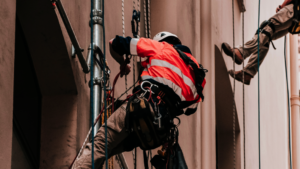
Rope access can support selected inspection and maintenance activities where qualified personnel, suitable anchor systems, and approved procedures are available.
Mobile Elevating Work Platform
A mobile elevating work platform can provide elevated access from an accessible ground or support surface. Reach, ground conditions, building surroundings, and equipment dimensions may limit its suitability for certain high-rise applications.
The correct access solution should reflect the building, work scope, site conditions, safety requirements, and expected frequency of use.
How Groxx Gears Supports High-Rise Access and Safety
Groxx Gears is positioned as a provider of heavy-duty industrial solutions for construction and maintenance applications. Its portfolio covers areas such as precision fasteners, rigging equipment, fall protection, and building maintenance systems.
For high-rise properties, Groxx Gears provides suspended access solutions suited to applications such as facade cleaning, glass replacement, and structural inspection.
Its building maintenance solutions complement a wider approach to high-rise safety. A building maintenance unit (BMU) Singapore project may require consideration of access equipment alongside fall protection systems, anchors, lifelines, and other safety equipment.
Groxx Gears also emphasizes engineering quality across its industrial equipment portfolio. Its stated approach includes high-strength alloys, advanced heat-treatment processes, CNC grinding and hobbing machinery, tight manufacturing tolerances, and AGMA quality levels for relevant gearing applications.
This engineering-focused approach supports the broader GROXX positioning around durable equipment for demanding industrial environments.
What to Consider Before Choosing a BMU Supplier Singapore
Selecting a building maintenance unit (BMU) Singapore supplier should involve more than comparing equipment prices. The supplier’s engineering capability, technical support, equipment quality, and understanding of high-rise access requirements can all affect the long-term result.
Building-Specific Design Capability
Ask whether the supplier can assess the building’s roof configuration, facade geometry, access points, operating requirements, and maintenance activities.
Equipment Quality and Durability
BMU equipment can face demanding operating conditions. Material quality, mechanical construction, corrosion considerations, component quality, and maintenance requirements should receive careful attention.
Safety Integration
A BMU should be considered alongside the building’s wider safety arrangements. Ask how the proposed system works with applicable fall protection equipment and access procedures.
Installation and Commissioning Support
Proper installation and commissioning are important for equipment that will support recurring high-rise maintenance work. Clarify what technical assistance is available during project delivery.
Maintenance and After-Sales Support
Long-term support matters because BMUs are not one-time-use equipment. Planned inspection, servicing, replacement parts, troubleshooting, and technical assistance can help maintain equipment performance throughout its service life.
Common BMU Planning Mistakes to Avoid
Several planning issues can create operational difficulties later.
One common mistake is selecting equipment without conducting a complete facade assessment. Another is failing to account for roof space, travel paths, storage requirements, or access restrictions.
Other concerns include:
- Ignoring required reach
- Failing to assess facade projections and recesses
- Treating BMU equipment separately from fall protection planning
- Focusing only on purchase price
- Failing to consider future facade maintenance
- Overlooking operator training
- Neglecting inspection and servicing requirements
- Choosing equipment without sufficient technical support
A building maintenance unit (BMU) Singapore solution should be planned around actual building requirements rather than generic equipment specifications.
Questions to Ask Before Investing in a Building Maintenance Unit
Before selecting a BMU system, building owners and project teams should ask:
- What facade areas must the BMU reach?
- What platform capacity is required?
- How much roof space is available?
- Does the building require horizontal travel?
- What boom or arm configuration suits the facade?
- How will the BMU work alongside existing fall protection systems?
- What maintenance schedule will the equipment require?
- Who will handle installation and commissioning?
- What operator training is available?
- What technical support will be available after installation?
- What inspection requirements apply to the equipment?
- Can the proposed system support the building’s expected future maintenance requirements?
These questions can help project teams compare suppliers more effectively and identify potential access issues before equipment selection is finalized.
Takeaway
A building maintenance unit (BMU) Singapore system can provide a practical foundation for recurring facade cleaning, inspection, glass replacement, and exterior maintenance across high-rise structures. Its value depends heavily on proper planning, suitable equipment selection, professional installation, regular servicing, and appropriate safety procedures.
The best BMU solution should reflect the building’s architecture rather than rely on a one-size-fits-all approach. Roof layout, facade geometry, reach, platform requirements, travel paths, maintenance tasks, and fall protection should all receive careful consideration.
Groxx Gears supports high-rise maintenance requirements through building maintenance systems, suspended access solutions, and a wider range of fall protection and industrial safety equipment.
For developers, property owners, facility managers, and contractors seeking a building maintenance unit (BMU) Singapore solution, careful technical planning can help create a more practical and reliable approach to high-rise facade maintenance.
FAQ About Building Maintenance Unit (BMU) Singapore
What is a building maintenance unit?
A building maintenance unit is a dedicated mechanical access system designed to help trained personnel reach exterior surfaces of high-rise buildings for approved maintenance activities. A building maintenance unit (BMU) Singapore system may include roof-mounted equipment, an operating arm, hoisting equipment, a suspended platform, controls, and safety components.
What is a BMU used for?
A BMU may support facade cleaning, glass replacement, exterior inspection, facade repairs, and other approved high-rise maintenance activities. The actual work scope depends on equipment design, capacity, operating procedures, and project requirements.
Why are BMUs important for high-rise buildings?
High-rise facades can be difficult to reach through ground-based methods. A properly designed building maintenance unit (BMU) Singapore system can provide controlled access to designated exterior areas and support recurring maintenance operations.
How does a BMU differ from scaffolding?
A BMU is typically designed as part of a building’s permanent facade access strategy, while scaffolding is generally a temporary access structure assembled for a particular project or work period. Both have useful applications, depending on building design and work requirements.
Can a BMU work with fall protection systems?
Yes, BMU planning can be considered alongside suitable fall protection systems. The exact arrangement depends on the building, equipment configuration, applicable safety requirements, and work procedures.
How do I choose a BMU supplier Singapore?
Look for a supplier with suitable engineering capability, quality equipment, high-rise access experience, installation support, safety-system knowledge, and long-term technical assistance. Building-specific assessment should form part of the selection process.
Does every high-rise building need a BMU?
Not necessarily. The appropriate access method depends on the building design, facade type, maintenance requirements, site conditions, and project planning. A professional assessment can help determine whether a building maintenance unit (BMU) Singapore system is suitable.
What maintenance does a BMU require?
Maintenance requirements depend on the system design and manufacturer specifications. Regular inspection, servicing, testing, component checks, and operator-related procedures should be planned according to applicable requirements and equipment documentation.