Accessing elevated, remote, steep, or difficult locations can present major challenges for construction teams, facility managers, industrial operators, tourism developers, and infrastructure contractors. Conventional access methods may not always suit projects where terrain, elevation, distance, or structural conditions create complex requirements.
Ropeway access Philippines solutions provide a practical approach for projects that require controlled movement across challenging spaces. Through carefully planned cable routes, support structures, load considerations, and suitable equipment, ropeway systems can help create reliable access and transportation paths for people, equipment, or materials.
828 Cable System Inc. specializes in rope, height, and load engineering. The company was established within the Benedicto Steel Group to serve the broader rigging industry, with services covering wire rope-related projects, fall protection, height access solutions, ropeway engineering, and related cable and load applications across the Philippines and Asia.
This broad technical background allows 828 Cable System Inc. to approach ropeway access Philippines projects from an engineering perspective, rather than treating cables, supports, loads, and access equipment as separate concerns.
What Is Ropeway Access?
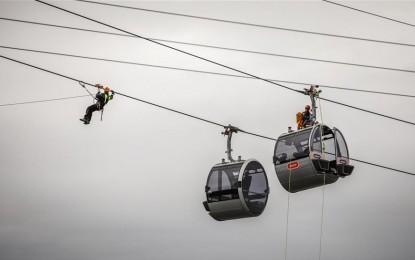
Ropeway access refers to a cable-based system designed to provide movement across areas where ordinary routes or access equipment may not be practical. Depending on project requirements, a ropeway may support personnel, equipment, materials, or other loads along a defined route.
A typical ropeway system may involve cables, support structures, carriers, attachment components, tensioning equipment, and other mechanical elements. Each component must work as part of a properly planned system.
The exact configuration depends on several factors, such as:
- Distance between access points
- Elevation changes
- Terrain conditions
- Expected loads
- Cable span
- Support locations
- Environmental exposure
- Intended users
- Operating requirements
- Inspection and maintenance needs
For this reason, ropeway access Philippines projects should begin with a clear understanding of the site and the task. A system designed for a tourism attraction may have very different requirements from a cable system used for industrial access or infrastructure work.
The goal is to develop an access arrangement suited to actual project conditions.
Why Ropeway Access Philippines Solutions Matter for Difficult Projects
Many Philippine projects involve terrain, structures, elevations, and environments that make conventional access challenging. Mountain resorts, infrastructure sites, industrial facilities, construction projects, and large structures may require specialized methods for reaching specific locations.
A properly planned ropeway access Philippines solution can provide a defined route across difficult spaces while supporting the project’s operational requirements.
Access Across Difficult Terrain
Steep slopes, elevated areas, remote locations, and large site distances can create access challenges. A cable-based system may provide a practical route where constructing a conventional path would require extensive work.
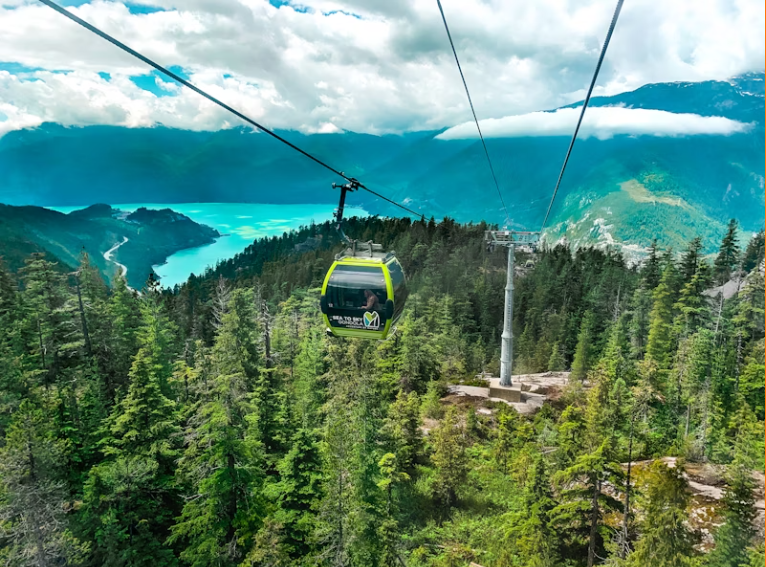
Ropeway solutions may have applications across mountain areas, tourism developments, industrial facilities, and other locations where terrain affects normal movement.
Controlled Cable-Based Movement
Cable systems create a defined movement path between selected points. Engineering considerations such as cable configuration, support structures, load requirements, and operating conditions help determine the appropriate system arrangement.
This makes cable engineering a critical part of ropeway access Philippines planning.
Support for Specialized Operations
Ropeway systems may support several project types, such as:
- Industrial access
- Construction activities
- Infrastructure work
- Tourism developments
- Adventure facilities
- Remote-area access
- Maintenance operations
- Specialized transportation requirements
The correct system depends on the actual application and project requirements.
Connection With Height Access Systems
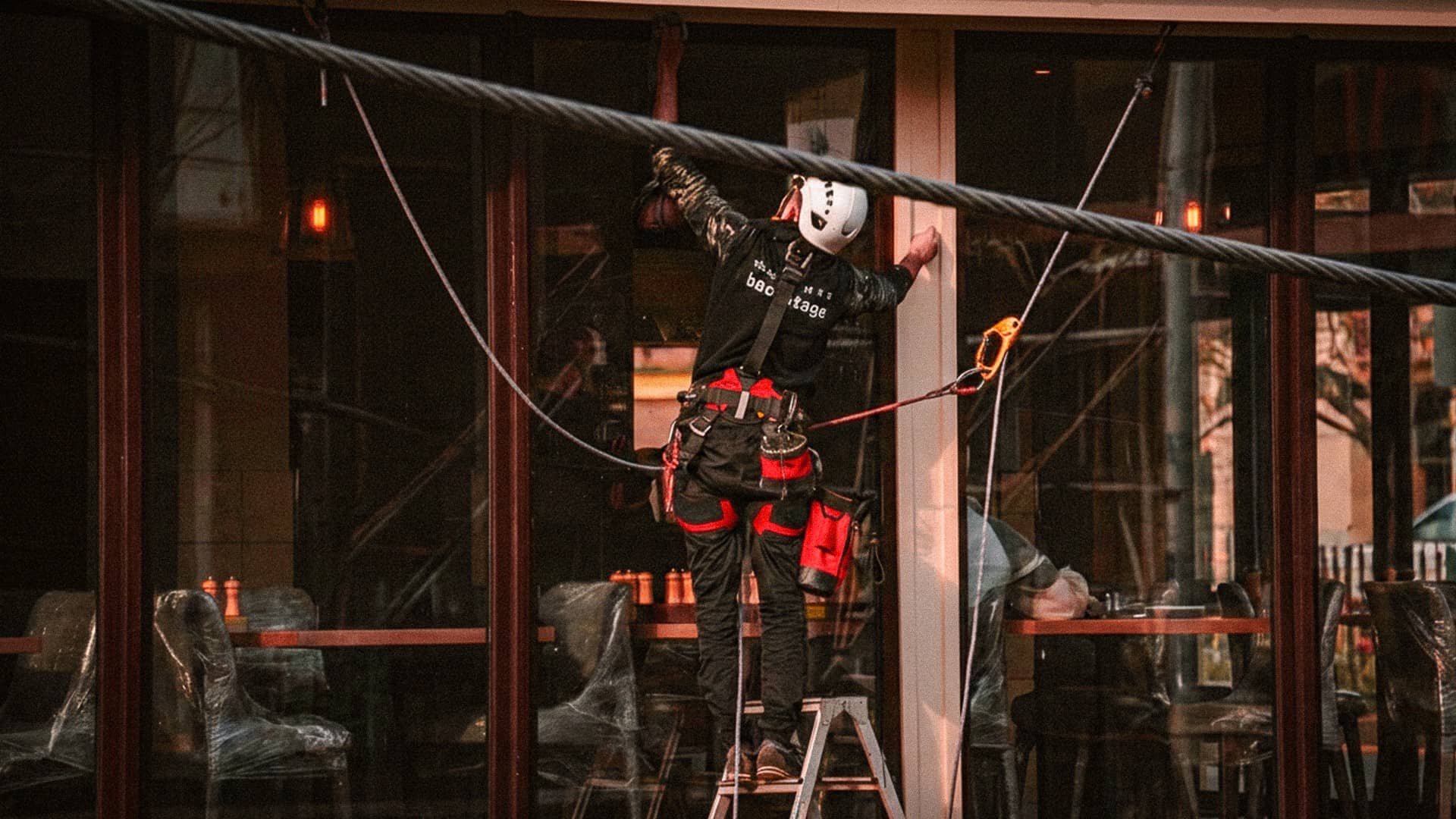
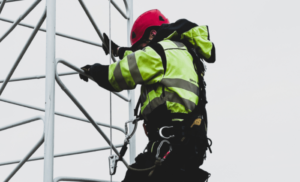
Ropeway engineering can also relate closely to height access and fall protection. A project may require more than one type of access solution, particularly where workers must reach elevated structures while remaining protected against falls.
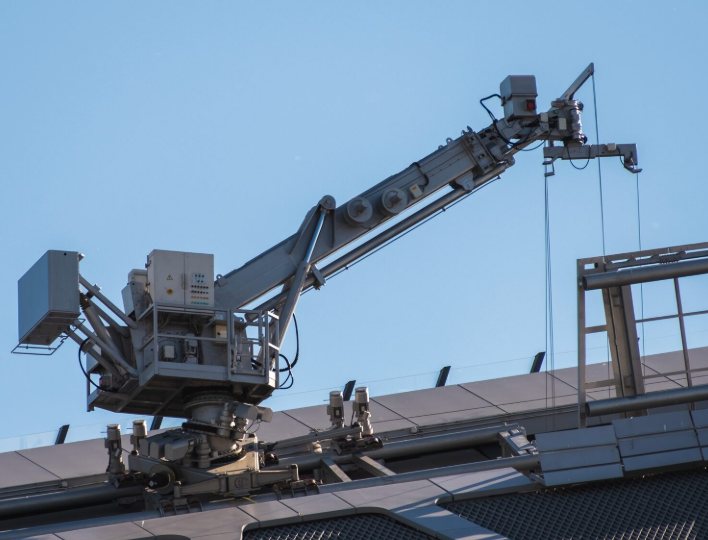
Company service materials show fall arrest systems and building maintenance systems as part of a wider industrial solutions portfolio, with applications covering rooftop work and suspended façade maintenance.
This broader technical capability can be useful when a project has several connected access and safety requirements.
Ropeway Engineering for Philippine Projects
A ropeway should not be selected solely by looking at cable size or equipment type. Proper planning requires an assessment of the complete system.
Ropeway access Philippines projects can involve structural, mechanical, operational, and safety considerations. Engineering helps connect these requirements into a suitable system concept.
828 Cable System Inc. focuses on ropeway engineering as part of its wider rope, height, and load engineering services.
Site Assessment
Site conditions can influence virtually every part of a ropeway system. A project assessment may consider:
- Terrain profile
- Elevation
- Access points
- Existing structures
- Available support locations
- Environmental conditions
- Required route
- Equipment access
- Maintenance requirements
A clear site assessment helps establish practical design parameters before equipment and components are selected.
Cable Route Planning
Cable routing plays a major role within ropeway access Philippines projects. The route must correspond with the intended movement path and available structural support.
Engineers may assess:
- Cable spans
- Support positions
- Anchor locations
- Clearance requirements
- Movement direction
- Structural interfaces
- Equipment placement
A carefully planned route can help create a functional and maintainable cable system.
Load Assessment
Load engineering is another major consideration. A system carrying personnel has different requirements from a system intended for equipment or materials.
Expected loads should be established before system components are selected. Dynamic effects, operating conditions, support structures, and attachment points may also require assessment.
828 Cable System Inc. offers load engineering alongside ropeway, cable, height access, and other specialized services, providing a broader engineering perspective for complex projects.
Cable Engineering and Ropeway Access Philippines
Ropeway systems depend heavily on cable performance and system configuration. Cable selection should correspond with project requirements rather than rely on a generic specification.
Cable engineering may consider:
- Cable type
- Cable diameter
- Strength requirements
- Span length
- Tension
- Load conditions
- Support arrangement
- Environmental exposure
- Service conditions
- Inspection requirements
Wire rope is a critical component of many lifting, access, and transportation systems. Its selection and application should therefore correspond with the system’s expected operating conditions.
828 Cable System Inc. was created to serve wire-rope-related projects across the Philippines and Asia. Its service portfolio covers fall protection, height access, ropeway engineering, zipline engineering, cable engineering, and load engineering.
That combination is particularly relevant for ropeway access Philippines projects that require several connected engineering disciplines.
Ropeway Access Compared With Other Height Access Methods
Different projects require different access methods. Ropeway access should be assessed alongside other available systems rather than treated as a universal solution.
| Access Method | Common Application | Main Consideration |
|---|---|---|
| Ropeway systems | Cable-based movement across difficult terrain | Route, cable, support, and load requirements |
| Rope access | Specialized work at height | Personnel training and safety equipment |
| Building maintenance systems | Façade cleaning, inspection, and maintenance | Building-specific access design |
| Scaffolding | Construction and maintenance | Ground support and installation requirements |
| Cranes | Heavy lifting and material handling | Capacity, reach, and operating conditions |
The most suitable solution depends on site conditions, work scope, load requirements, access needs, and project objectives.
A company capable of assessing multiple access approaches can help project teams identify a solution that matches their actual requirements.
Applications for Ropeway Access Philippines Projects
The Philippines has diverse terrain and a wide range of construction, industrial, tourism, and infrastructure projects. This creates several potential applications for specialized cable systems.
Tourism and Adventure Facilities
Tourism developments may require cable-based systems for mountain attractions, recreational facilities, resorts, and adventure destinations.
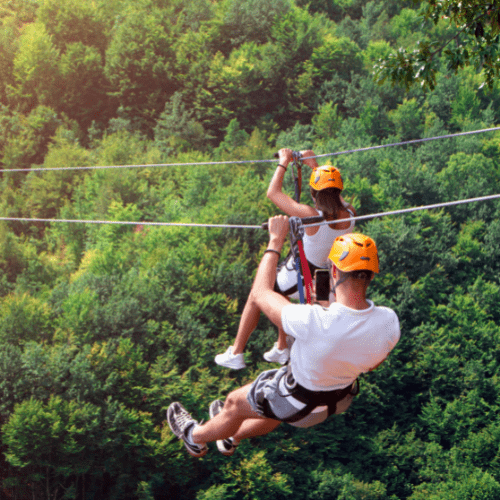
Zipline engineering is particularly relevant for recreational systems where cable routes, rider loads, support structures, and operating conditions require careful technical planning.
Ropeway engineering may address broader cable mobility requirements beyond recreational zipline applications.
Construction and Infrastructure
Construction projects may involve elevated structures, remote locations, bridges, steep terrain, or other areas where conventional access is difficult.
A ropeway access Philippines solution may support specific movement or access requirements where a cable-based route is suitable.
Industrial Operations
Industrial facilities often contain elevated structures, complex equipment, and areas that are difficult to reach using ordinary methods.
Cable systems may form part of a larger access strategy for specialized industrial applications. Related height-access and fall-protection systems can also help address worker access requirements.
Building Maintenance
High-rise buildings require practical ways to reach façades, roofs, exterior structures, and other elevated areas.
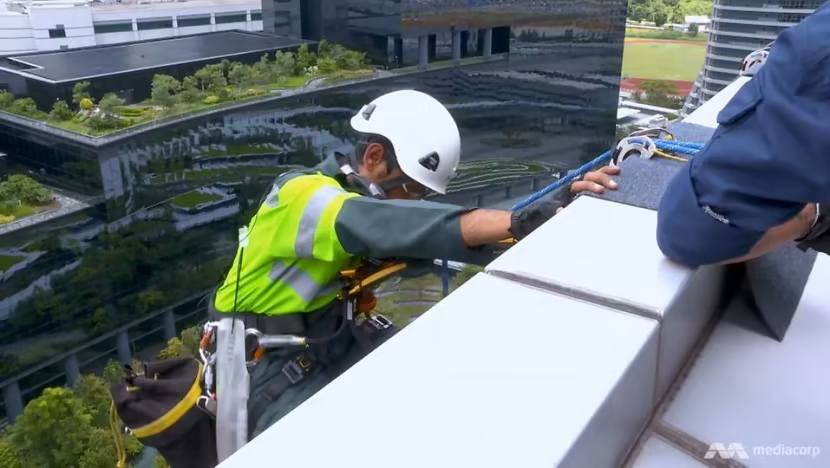
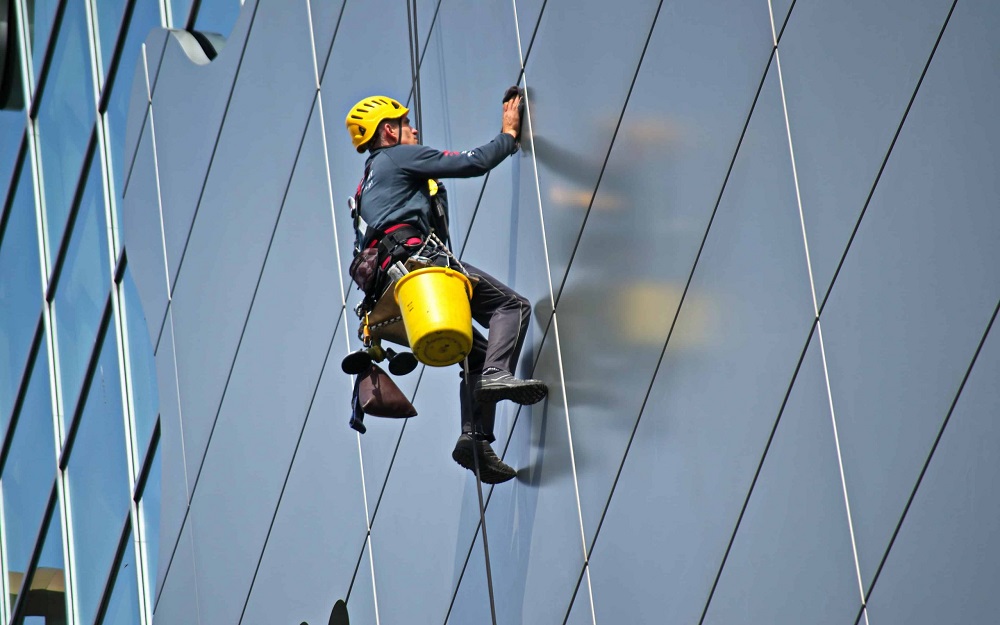
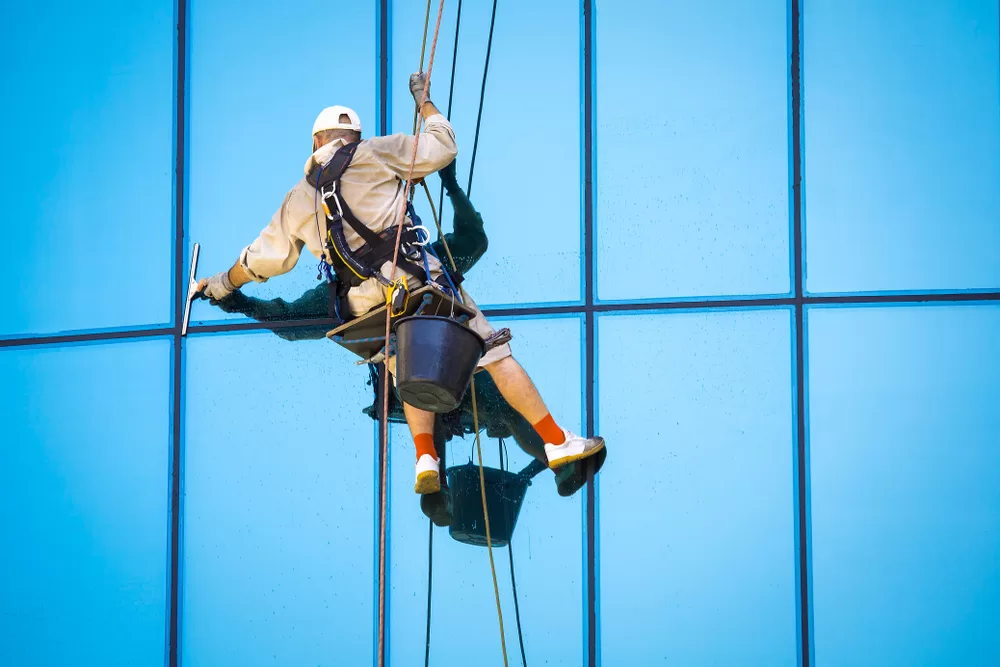
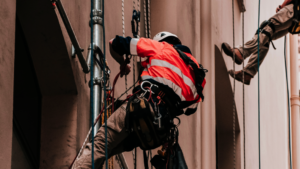
Building maintenance systems can support cleaning, inspection, repair, and maintenance tasks. Company service visuals show suspended workers performing façade-related work using rope access equipment on modern high-rise structures.
For projects requiring both ropeway concepts and building access systems, coordinated engineering can help avoid disconnected solutions.
Ropeway Engineering and Zipline Engineering: What Is the Difference?
Ropeway engineering and zipline engineering share several technical principles, but their applications can differ.
Zipline systems are commonly associated with recreational or controlled rider movement along an inclined cable. Design considerations may include rider weight, cable route, braking, support structures, cable tension, and operational requirements.
Ropeway systems can cover a broader range of cable-based transportation and access applications. Depending on project requirements, these systems may support people, equipment, or materials.
Both require careful attention to cable systems, structural support, load requirements, route planning, and safety.
For this reason, a ropeway access Philippines provider with experience across both ropeway and zipline engineering can offer useful technical insight when project requirements overlap.
Safety Considerations for Ropeway Access Philippines
Safety should be part of the design process from project planning through operation and maintenance.
Several areas deserve careful attention:
Correct System Selection
The selected system should match the intended use, site conditions, expected loads, and operating environment.
Structural Capacity
Support structures, attachment points, and connected components should be assessed for their intended loads and operating conditions.
Cable and Hardware Condition
Cable systems require appropriate inspection and maintenance. Wear, corrosion, deformation, damage, and other conditions should be assessed according to the applicable inspection program.
Load Limits
Operators should understand the system’s intended load capacity and operating limits. Loads should never exceed approved system requirements.
User Requirements
Personnel who operate or use specialized access systems should receive appropriate training for the equipment and task.
Emergency Planning
Projects should also consider emergency procedures, rescue arrangements, maintenance access, and other operational requirements before system deployment.
A sound ropeway access Philippines strategy therefore combines engineering, equipment selection, installation, operation, inspection, and maintenance.
Why Choose 828 Cable System Inc. for Ropeway Access Philippines?
828 Cable System Inc. was founded within the Benedicto Steel Group to serve the rigging industry and support wire-rope-related projects. Its stated service coverage extends across the Philippines and Asia.
The company’s core positioning centers on expertise covering rope, height, and load engineering.
Its service categories include:
- Fall Protection
- Height Access Solutions
- Ropeway Engineering
- Zipline Engineering
- Cable Engineering
- Load Engineering
- Overhead Crane
- Gantry Crane
- Jib Crane
- Automatic Hooks
This broad service range can be useful for projects where ropeway requirements overlap with lifting, height access, fall protection, or cable engineering.
Rather than viewing each component separately, project teams can consider how ropes, cables, loads, structures, access requirements, and equipment relate to the overall system.
For ropeway access Philippines projects, this engineering-focused approach can help project stakeholders develop clearer requirements before installation begins.
How to Plan a Ropeway Access Project
A successful ropeway project starts with good project information. The following process can help organize requirements.
1. Define the Access Requirement
Start by identifying what needs to move and where movement must occur.
Questions may include:
- Will the system carry people?
- Will it move equipment or materials?
- What are the starting and ending points?
- What distance must the system cover?
- What elevation difference exists?
2. Assess Site Conditions
Review terrain, structures, access points, environmental exposure, and available support locations.
Site information helps engineers determine whether a ropeway solution is suitable.
3. Establish Load Requirements
Identify expected loads and operating conditions. Consider personnel, equipment, materials, and other applicable loads.
Load requirements should be established before final system selection.
4. Select the Appropriate System
Depending on the project, possible solutions may include ropeway systems, rope access, building maintenance systems, cable systems, or other engineered access arrangements.
5. Develop the Engineering Design
The design stage can address cable routing, supports, structural interfaces, equipment, loads, safety provisions, and operational requirements.
6. Plan Installation and Maintenance
Installation should follow the approved system design. Long-term maintenance and inspection requirements should also form part of the project plan.
A complete approach helps create a system that can serve its intended purpose while remaining practical to inspect and maintain.
Questions to Ask a Ropeway Access Provider
Before selecting a provider for ropeway access Philippines, project owners and engineers should ask clear technical questions.
- What type of ropeway system suits the project?
- What site information is needed for assessment?
- What loads must the system accommodate?
- How will the cable route be established?
- What support structures are required?
- What safety systems may be required?
- What installation services are available?
- What inspection and maintenance requirements should be planned?
- Can the provider support related height-access requirements?
- Can ropeway requirements be coordinated with cable and load engineering?
These questions can help project teams compare providers based on technical capability rather than equipment availability alone.
Takeaway
Ropeway access Philippines solutions can provide practical options for projects that face challenging terrain, elevated work areas, remote locations, specialized transportation needs, or complex cable requirements.
Successful ropeway projects require more than selecting a cable and equipment. Site conditions, cable routes, structural supports, loads, operating requirements, safety measures, installation, inspection, and maintenance all deserve careful consideration.
828 Cable System Inc. brings together rope engineering, height engineering, load engineering, cable engineering, ropeway engineering, and related access services. Its wider portfolio covers fall protection, height access, zipline engineering, overhead cranes, gantry cranes, jib cranes, and automatic hooks.
For companies planning ropeway access Philippines projects, working with a specialist capable of addressing rope, height, cable, and load requirements can provide a more coordinated path from project assessment through system implementation.
Frequently Asked Questions About Ropeway Access Philippines
What is ropeway access Philippines?
Ropeway access Philippines refers to cable-based access or movement solutions designed for challenging locations, elevated areas, difficult terrain, industrial facilities, tourism projects, and other specialized applications.
Where can ropeway systems be used?
Potential applications include tourism facilities, adventure parks, construction projects, infrastructure sites, industrial facilities, remote locations, and specialized maintenance operations.
What is ropeway engineering?
Ropeway engineering covers the technical planning of cable-based systems, including route requirements, support structures, loads, cable configuration, operating conditions, and related system components.
Is ropeway access suitable for industrial projects?
It may be suitable for selected industrial applications where cable-based movement or access offers a practical solution. A project assessment should consider site conditions, loads, intended use, structural requirements, and operational needs.
What is the difference between ropeway engineering and zipline engineering?
Zipline engineering generally focuses on cable systems designed for controlled rider movement, often within recreational facilities. Ropeway engineering covers a broader range of cable-based transportation and access applications.
Why does load engineering matter for ropeway systems?
Load engineering helps determine how expected loads affect cables, supports, structures, equipment, and system performance. Proper load assessment is an important part of developing a suitable ropeway system.
Can ropeway engineering work alongside fall protection?
Yes. A project may require both ropeway or cable-based access and fall protection systems. The appropriate combination depends on the work environment, access method, user requirements, and project design.
Who provides ropeway access solutions in the Philippines?
828 Cable System Inc. provides ropeway engineering alongside fall protection, height access, zipline engineering, cable engineering, and load engineering services. The company serves wire-rope-related projects across the Philippines and Asia.